
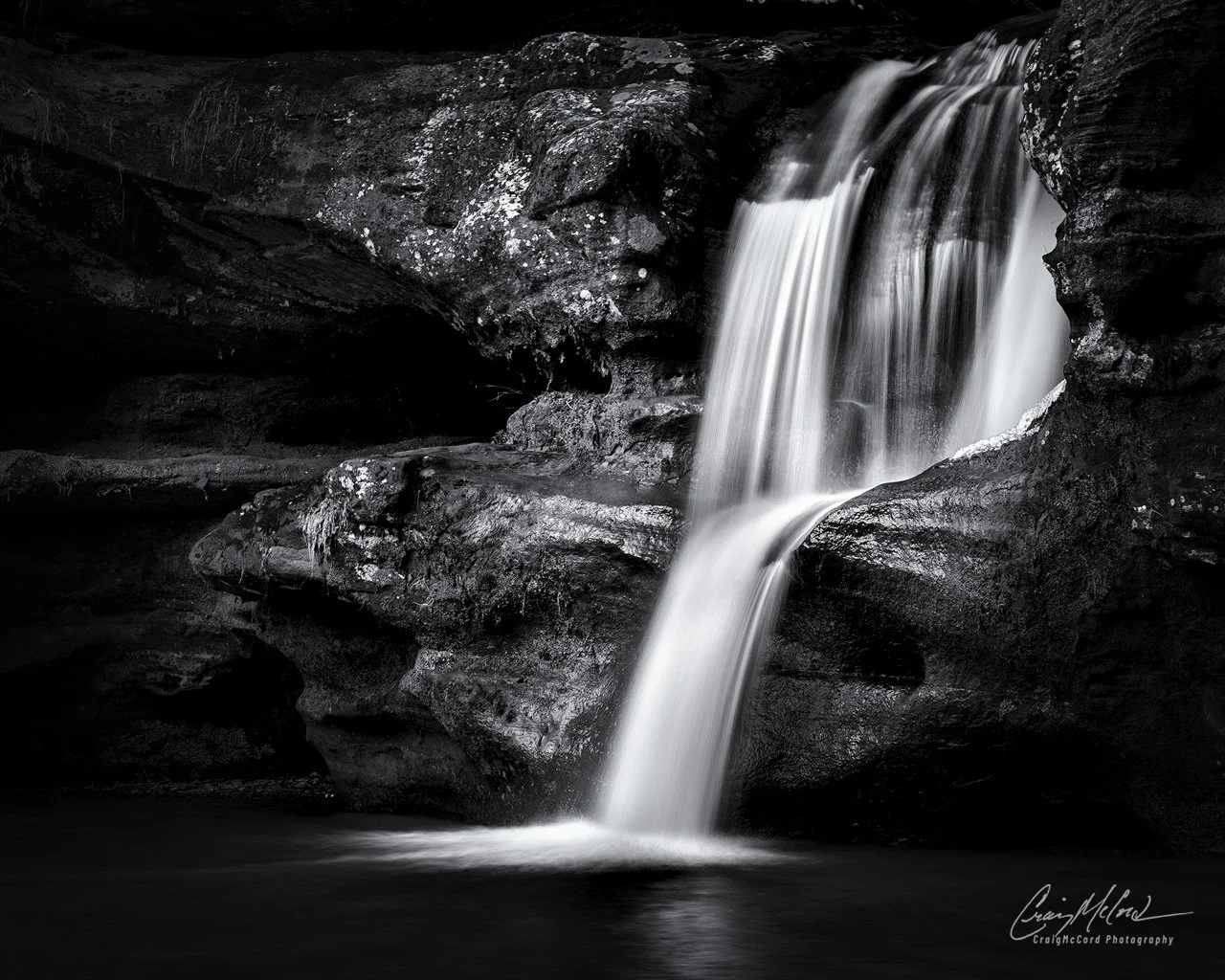
Beyond Color: Exploring Hocking Hills with a Black and White Mindset
Every time I hike into Hocking Hills with a camera, I’m reminded how much this place thrives on subtlety. It’s not just the waterfalls — though Upper Falls and Cedar Falls are always stunning — it’s the quiet textures: wet stone, layered bark, filtered light through hemlocks. And when I shoot in black and white, those subtleties come alive.
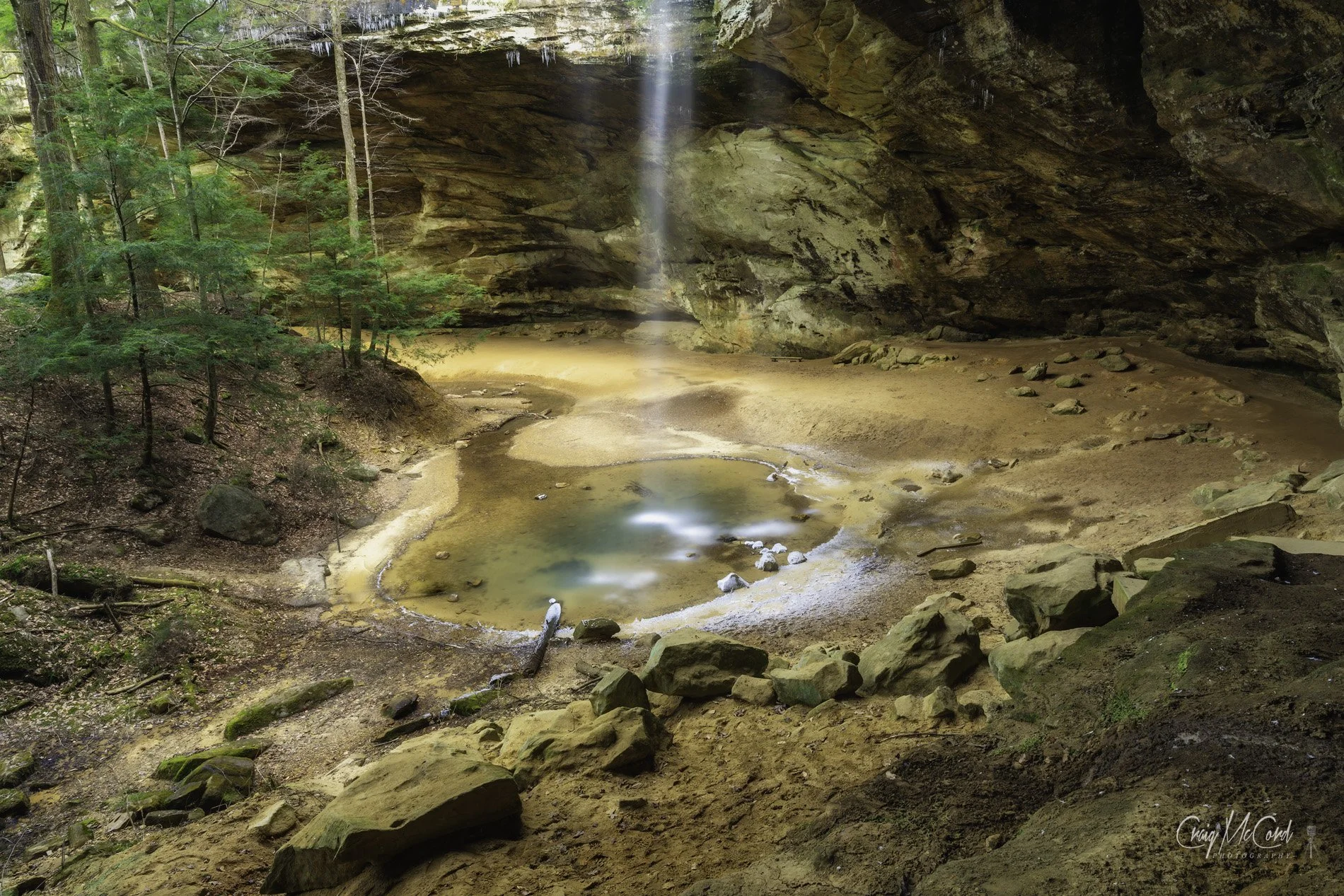
Ash Cave: The Amphitheater Beneath the Falls
Tucked into the southern rim of Hocking Hills, this vast recess cave opens like a sandstone sanctuary, shaped not by hands but by water and time. The trail leading in is quiet, hemmed by hemlocks and the soft murmur of a creek, until the forest parts and the cave rises: 700 feet wide, 100 feet deep, and crowned by a seasonal waterfall that spills like a veil from the rim above.
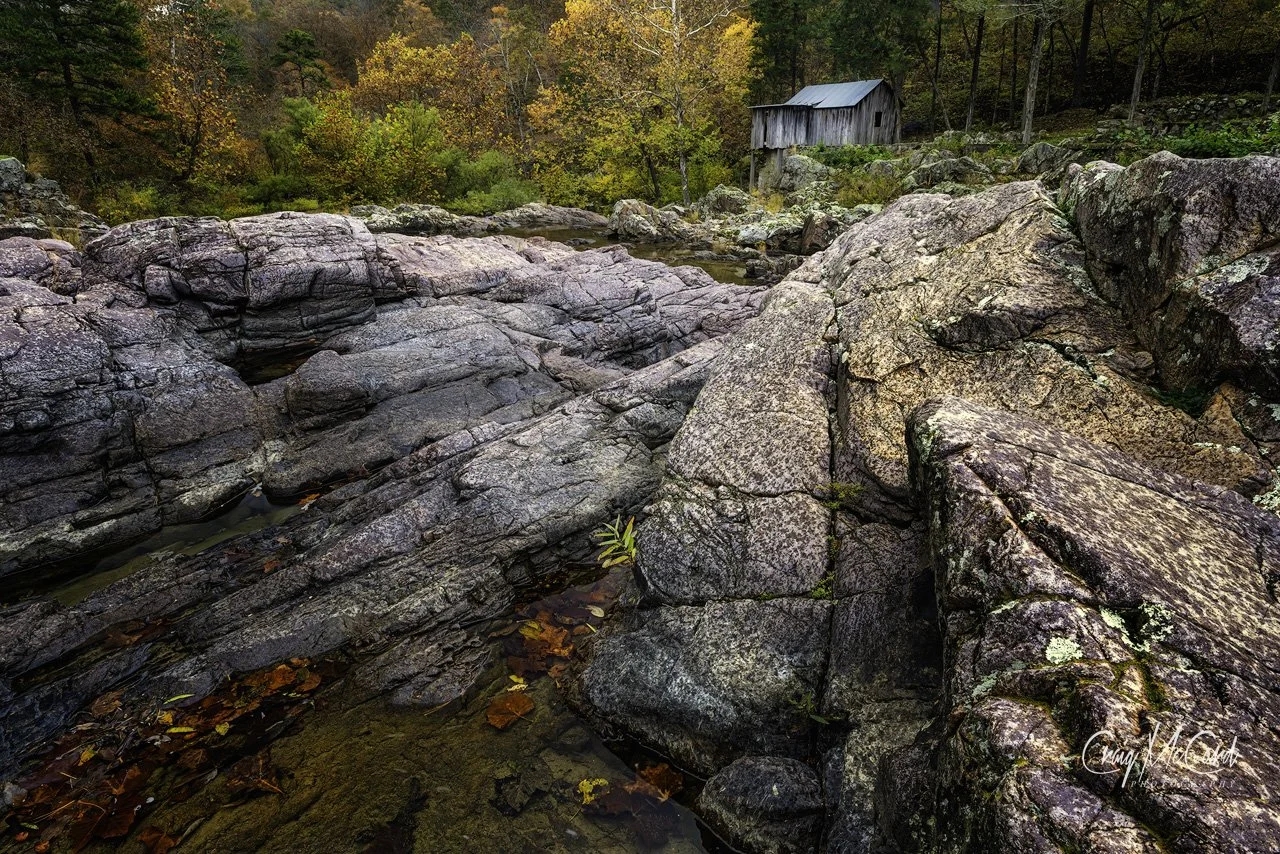
Klepzig Mill: A Quiet Testament in the Ozarks
Klepzig Mill wasn’t built to impress — it was built to endure. Raised in 1928 by Walter Klepzig, the structure reflects a kind of Ozark pragmatism: vertical pine planks nailed to hand-hewn sills, unmortared stone piers anchoring it to the creek’s edge, and a roof patched with corrugated iron and salvaged truck parts. Every element speaks to resourcefulness. Nothing wasted. Nothing ornamental.
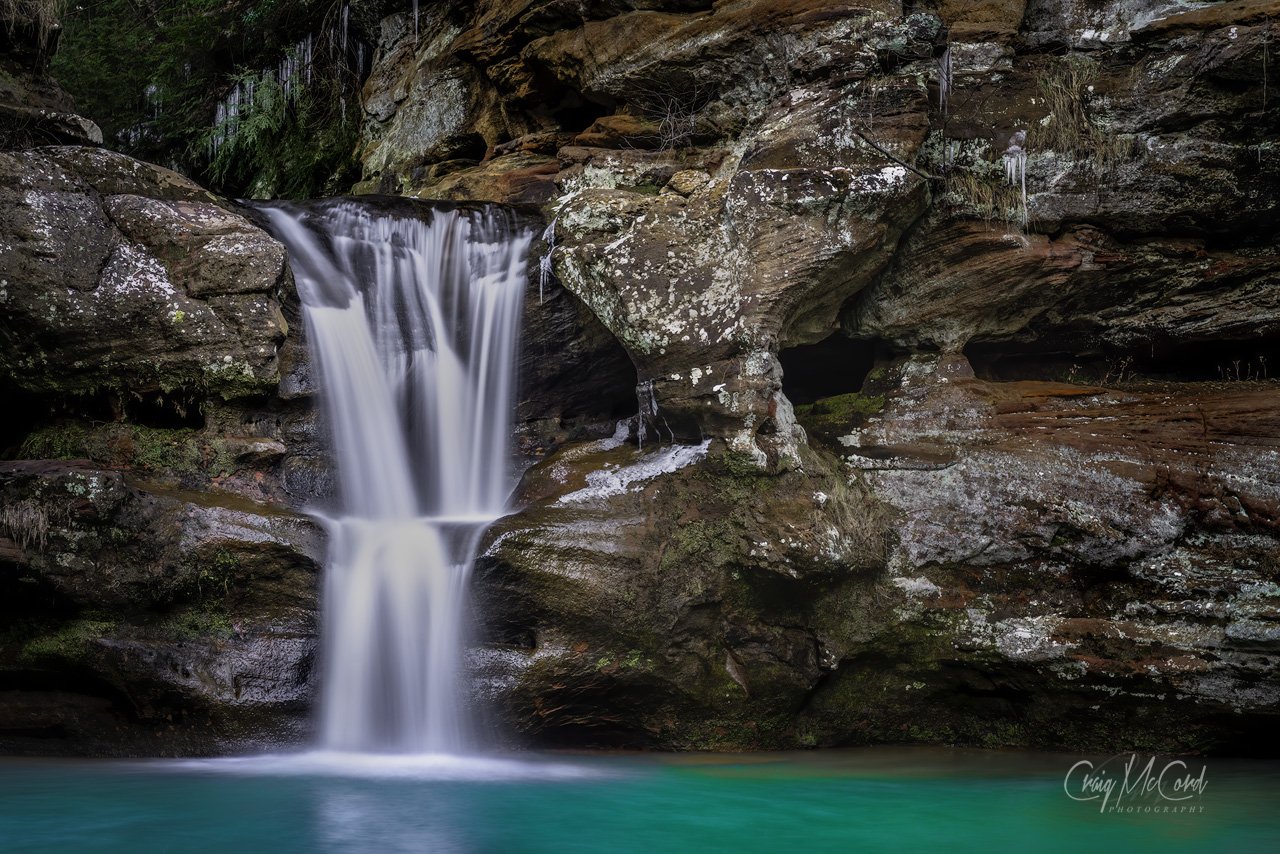
Hocking Hills: Erosion, Light, and Memory
Hocking Hills State Park has undergone a remarkable transformation over the past 30 years—from a beloved regional retreat to one of the most visited and celebrated natural destinations in the entire Midwest

The Badlands…Beyond Sunsets and Sunrises
When we think of landscape photography, our minds often drift to grand vistas and breathtaking sunsets, but there’s so much more to explore!
Why do We Photograph Trees?
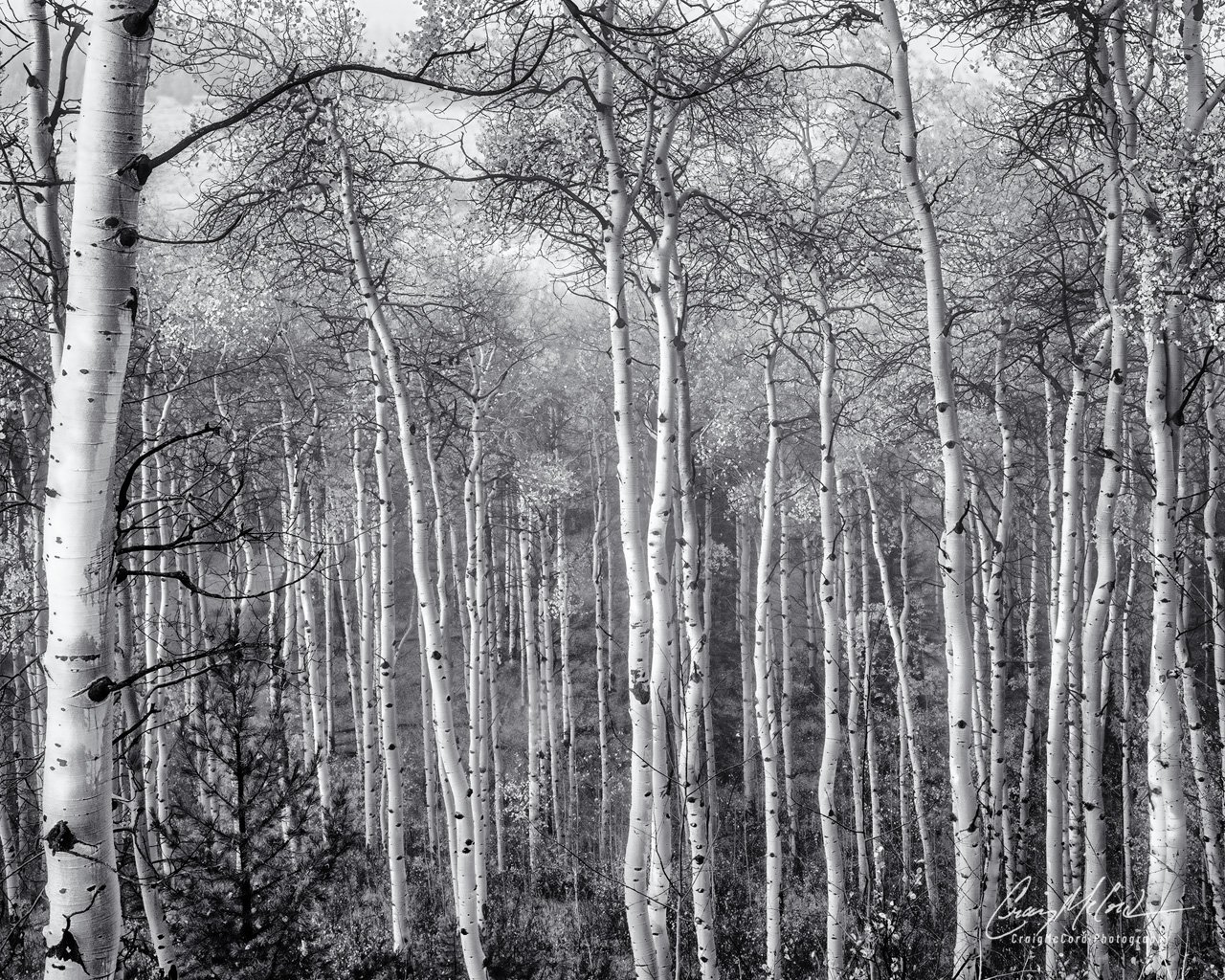
Why do we photograph trees? Why is it that many photographers love to use trees as photographic subjects? It makes you contemplate whether trees, like humans, have souls. Each individual tree is unique in many ways, even within species. Much like we humans, they possess their own shapes, beauty, faults, and their own life cycles.

Integrating Color Photography into Your Repertoire
Notwithstanding my recent return to old school analog photography, I have now decided to allow a bit of color work back into my repertoire

Coming Full Circle
Some time back I wrote a blog post called “Returning to the Cradle”. In it I discussed why I was returning to shooting mostly black and white in my photography. In fact, Not only am I now shooting mostly black and white, I am also doing it using medium and large format film. I guess I have completed the return cycle.

A Photography Composition Mystery
“What is he looking at,” asked a casual observer? During a recent photography outing to the Hocking Hills area in southern Ohio, I was approached by another photographer at one location who introduced himself and his partner. I recall they mentioned they organized photo adventures for groups. They were curious about me because as they noticed me working, they thought I must clearly be seeing or looking for different subject matter than they were.

Proficiency in Photography
Proficiency in photography is paramount. There is much said about developing your technical skills and creative vision in photography. And certainly one must conquer the basic tools of photography such as the relationships of ISO, shutter speeds, and exposure times, controlling depth of field and more. And let’s not forget the often overwhelming learning curve to operate today’s DSLRs. Navigating a camera’s multilayered function menu can be huge challenge at first.

Returning to the Cradle
Years ago, in the mid 70’s, I began my journey in photography. It all started with a Petri 35mm SLR that I purchased from a friend while serving in the Air Force. One of the on-base hobby shops was a fully equipped darkroom for developing and printing black and white film. I knew truly little about the technical aspects of photography at the time. However, the first time I saw the magic of the image slowly emerging in the developer I realized that I was hooked.