
Ash Cave: The Amphitheater Beneath the Falls
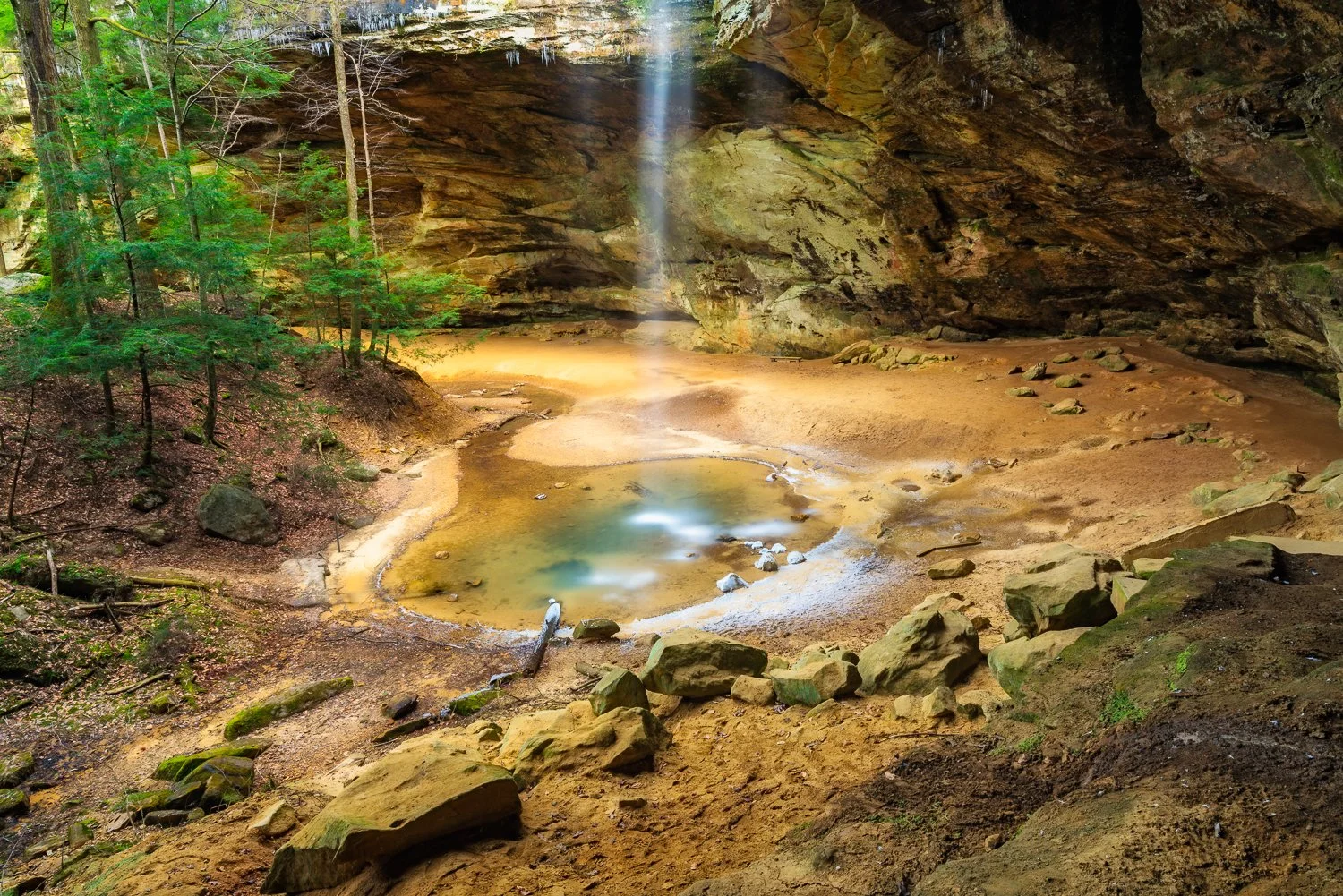
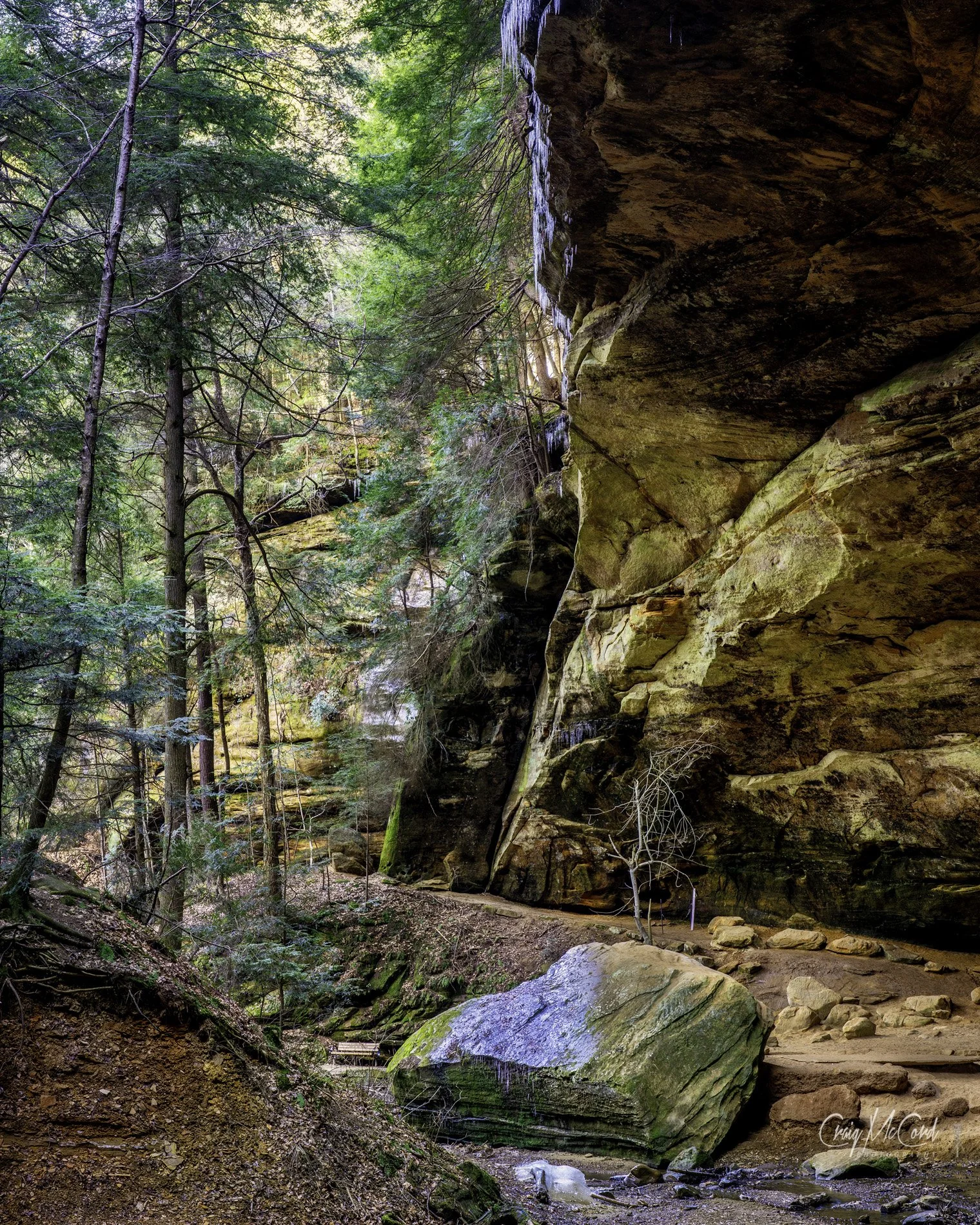
Stream Corridor with Moss-Covered Boulders approaching Ash Cave
Ash Cave doesn’t announce itself—it reveals. It’s not a cave in the traditional sense, but a recess cave—a vast horseshoe-shaped shelter formed by the erosion of the middle layer of Blackhand sandstone. It’s almost like a huge amphitheater. This recessed cave measures 700 feet wide, 100 feet deep and is the largest of tis kind in Ohio. It is certainly one of the diamonds of Hocking Hills State Park.
Approaching Ash Cave you will travel along a narrow gorge lined with hemlocks and beech trees common in the forest areas of Hocking Hills.
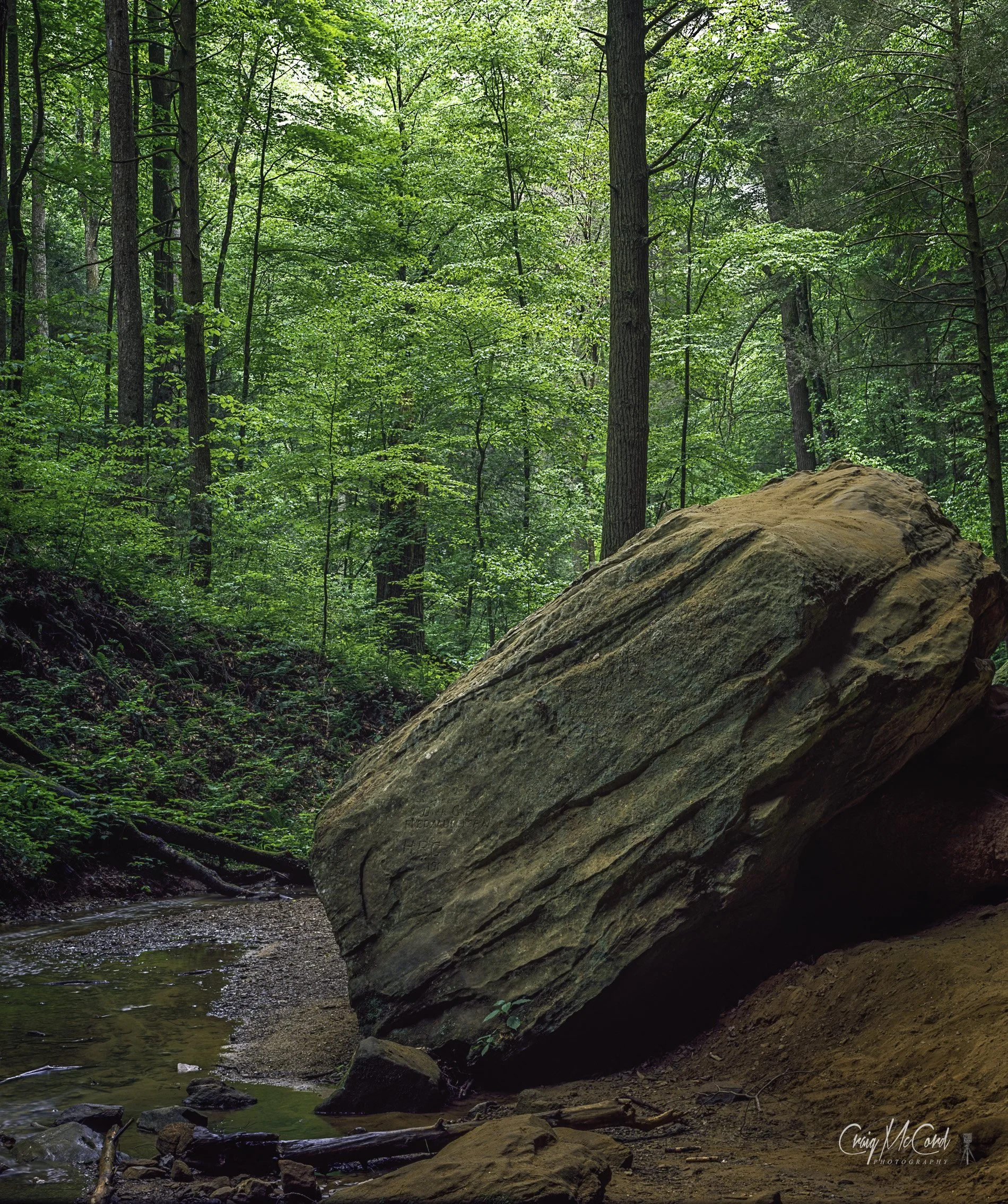
“Sentinel in the Streambed”: A Boulder’s Quiet Witness
Chamonix 44F2, 150mm, 1sec, Provia 100f
Tucked into the southern rim of Hocking Hills, this vast recess cave opens like a sandstone sanctuary, shaped not by hands but by water and time. The trail leading in is quiet, hemmed by hemlocks and the soft murmur of a creek, until the forest parts and the cave rises: 700 feet wide, 100 feet deep, and crowned by a seasonal waterfall that spills like a veil from the rim above. It’s a place where geology becomes architecture, where erosion carves grandeur, and where light and silence meet in ceremony.
Why is it Called Ash Cave?
Ash Cave earned its name from the massive piles of ashes found on its floor by early settlers. One deposit was reported to be over three feet deep and stretched more than a hundred feet long. These ashes are believed to be the remains of centuries of campfires, food preparation, and ceremonial gatherings by Indigenous peoples who used the cave as a shelter and meeting place. The name reflects both the cave’s natural grandeur and its long history of human presence.
Photographic Challenges
Ash Cave presents a unique challenge and a remarkable opportunity for landscape photographers. Because of its massive scale and the amphitheater-like structure of the cave, capturing its grandeur requires careful and thoughtful compositional planning to effectively convey its full spatial impact. Traditional framing techniques often fall short in portraying the cave’s vastness, making panoramic stitching or large-format capture particularly useful tools for preserving both the gentle curvature of the rock formations and the impressive vertical depth that defines this natural wonder.
Lighting Conditions
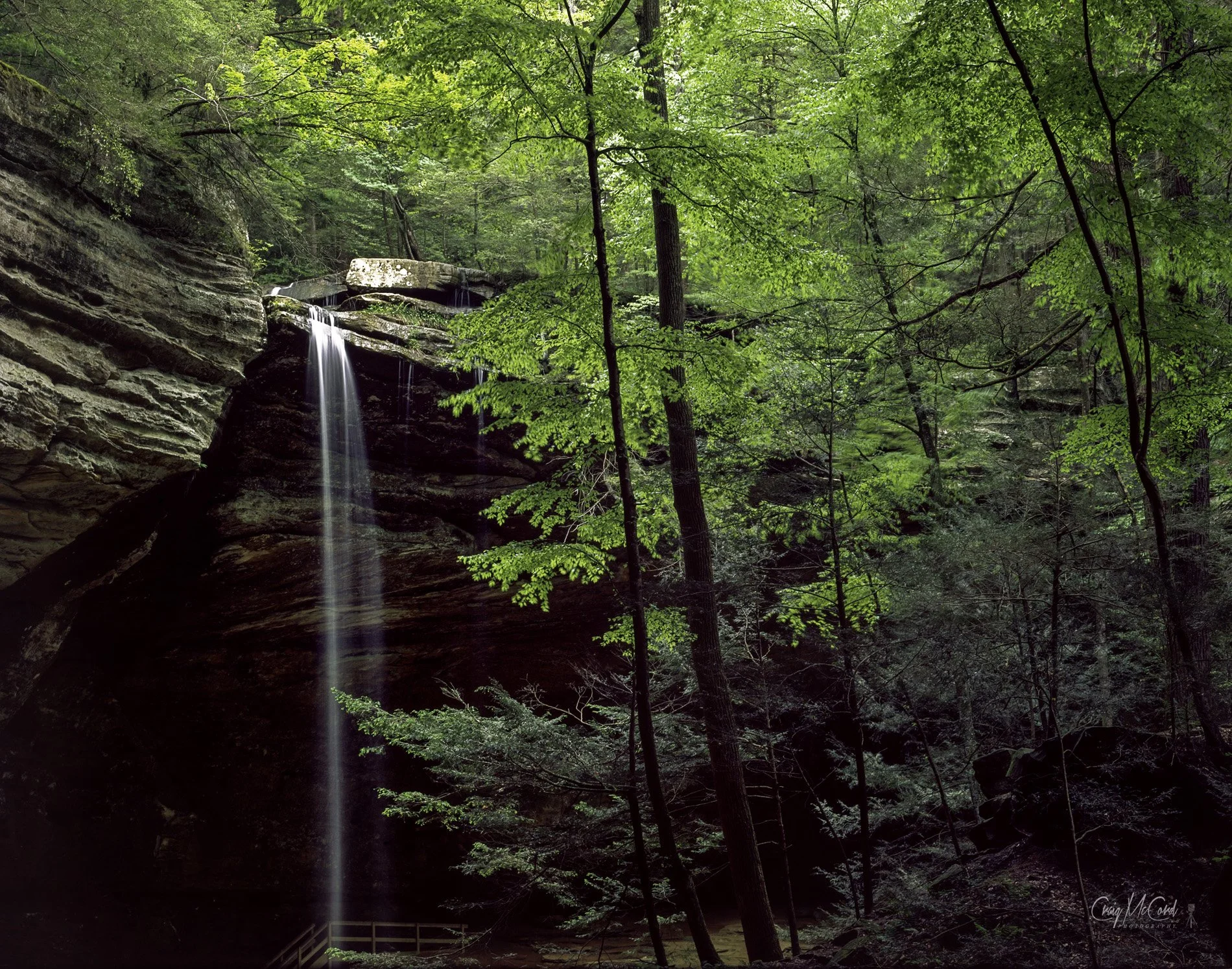
Ash Cave Overhang: Lightfall Through Hemlocks
Chamonix 45F2, 210m, 2sec, f/32, Provia 100F, no filter
Morning Light
Soft, indirect light enters from the east, illuminating the cave’s interior without harsh contrast. Ideal for black-and-white work as well as color.
Midday Challenges
Direct overhead light can flatten textures and blow highlights on the waterfall. By midday, direct sunlight penetrates the upper rim, creating harsh contrast and rapid exposure shifts—especially on the waterfall’s surface. This is not the best time for trying to capture the cave’s features or effective compositions. If you are shooting film, especially transparency, the contrast range can be quite problematic. You can try bracketing exposures if shooting digital but I would avoid this time of day, unless you were just visiting to enjoy the experience of the location.
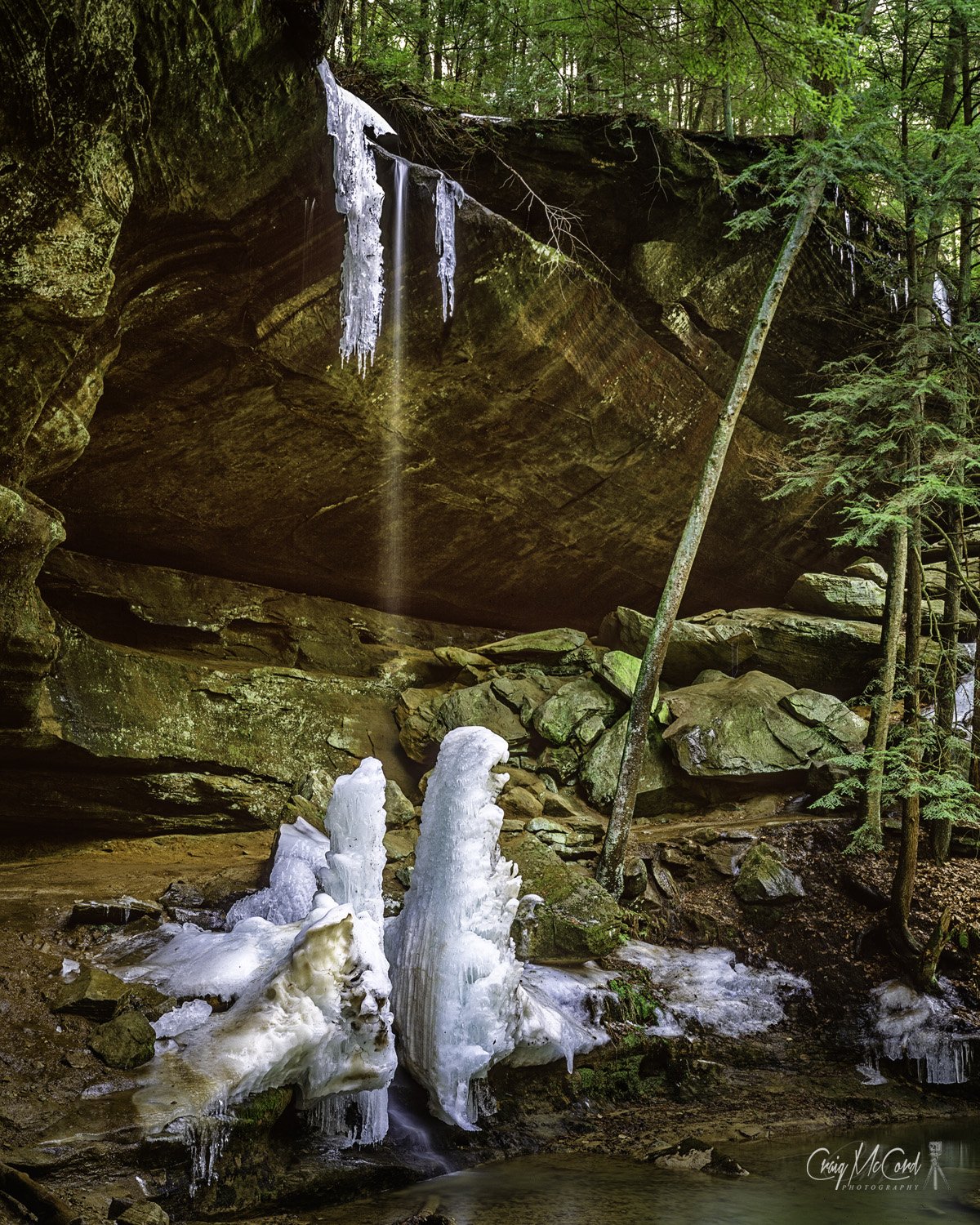
Winter’s Cathedral: Ice Towers Beneath the Ash Cave Overhang”
Zone VI 4×5, Fuji Velvia 50, 210mm, exposure unrecorded
Winter Ice Towers
During sustained cold spells, the waterfall at Ash Cave slows to a trickle or freezes entirely, allowing vertical ice columns to form beneath the overhang. These towers—sometimes reaching 20 feet or more—are built from successive layers of frozen spray, runoff, and ambient moisture. Their structure varies from smooth, translucent cylinders to jagged, crystalline stacks depending on temperature fluctuations and wind exposur
Black and White Opportunities
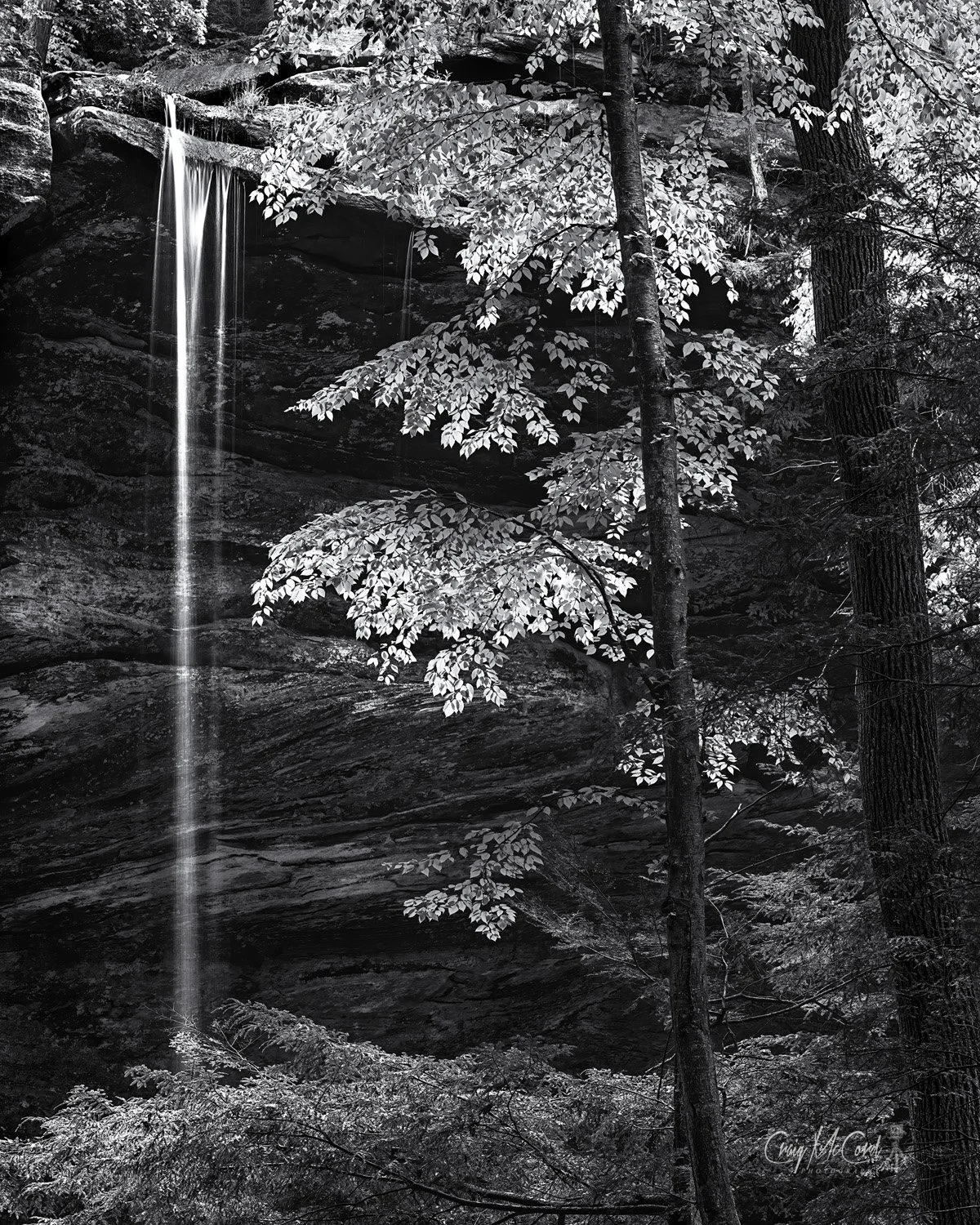
Backlit hemlock trees and Ash Cave waterfall.
Chamonix 45F2, 210mm, Ilford HP5+
Certainly, do not overlook the vast compositional options for exploring black and white imagery. Tones and textures of this area offer some great opportunities to expand your photographic creativity. Even in higher contrast situations—such as midday sun striking the waterfall or deep shadows beneath the overhang—black-and-white photography remains remarkably effective. These conditions, while challenging in color, offer opportunities to isolate form and emphasize geological features. Harsh light can be used to carve out striations in the rock face, while deep shadows lend drama and scale to the cave’s interior.
These observations are the result of repeated field visits, compositional trials, and technical testing with both digital and large and medium format film systems. Each visit refines the understanding of how Ash Cave behaves as a subject—not just geologically, but photographically.
Gear and Exposure Settings
Recommended Lenses
24mm for full-frame digital; 90mm or wider for 4x5 film. Tilt-shift lenses help correct vertical distortion when shooting upward.
Recommended Filters
Polarizing filters can be very useful in reducing reflections off of rocks and vegetation. If shooting color film, depending on your film stock, a warming filter may be useful.
Tripod Placement
Stable footing is available near the trail’s edge and under the overhang. Avoid wet sand near the plunge pool—tripod legs can sink.
Exposure Notes
Typical settings range from f/11 to f/22 for depth, with shutter speeds from 1/4 to 2 seconds depending on water flow. ISO 100 or native ISO setting for your camera is recommended for minimal grain or noise. If you are shooting film, longer exposures may require reciprocity failure considerations in determining correct exposure.
Step Into the Scene: Join Me This Spring in Hocking Hills
Ash Cave is more than a geological formation—it’s a living amphitheater where water, stone, and silence converge. Its shifting light, seasonal textures, and vast compositional potential make it an ideal site for photographers seeking to refine their vision and deepen their connection to place.
If this exploration has sparked ideas or questions about technique, storytelling, or fieldwork, I invite you to take the next step. This spring, I’ll be leading a hands-on photography workshop in Hocking Hills, where we’ll visit Ash Cave, Cedar Falls, and other iconic locations. Through guided prompts, technical support, and collaborative critique, you’ll gain practical tools and fresh perspectives to elevate your work, whether shooting digital or film.
Whether you're new to landscape photography or looking to push your creative boundaries, this workshop is designed to meet you where you are—and help you move forward with clarity and intention.
You might also consider my post on Upper Falls on Old Man’s Cave Trail: “Hocking Hills: Erosion, Light, and Memory”